How to Start an E-Commerce Business in Dubai from Pakistan in 2026
SEO Title: How to Start E-Commerce in Dubai from Pakistan 2026 – Complete Guide
Meta Description: Learn how to start an e-commerce business in Dubai from Pakistan with low investment. Discover marketplaces, suppliers, dropshipping, seller registration, payments, products, and more.
Focus Keyword: How to Start E-Commerce in Dubai
Secondary Keywords: Dubai e-commerce business, start e-commerce from Pakistan, Dubai dropshipping, UAE online business, e-commerce in UAE, Dubai seller account
How to Start E-Commerce in Dubai
Look, guys, when I uploaded multiple videos on my channel related to e-commerce, I received a lot of messages from my Pakistani audience asking:
“How can we start the same e-commerce business in Dubai?”
People were asking me:
- Where can we find trusted suppliers?
- Which platform should we use?
- What things do we need to start?
- Do we need a warehouse in Dubai?
- How much investment is required?
- Can we manage the business while sitting in Pakistan?
- Which platform is trusted for selling products in the UAE?
So I thought, why not share all of this with you?
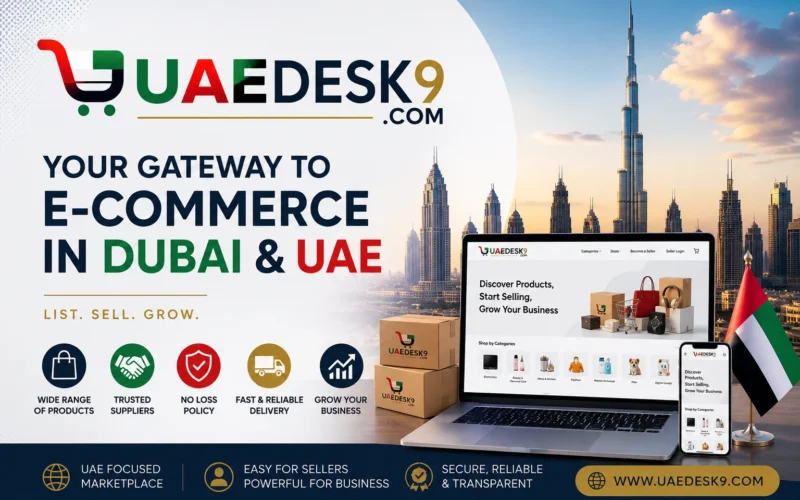
Today, I’m going to explain how you can start an e-commerce business targeting Dubai and the UAE, and how a marketplace platform can make the process easier.
Before we continue, keep in mind that UAE e-commerce businesses are subject to licensing and other legal requirements. The official UAE Government portal states that businesses conducting e-commerce activities need the appropriate licence and approvals.
UAE Government – E-Commerce Information
Why Start E-Commerce in Dubai?
One reason many Pakistani entrepreneurs are interested in the UAE market is the growing acceptance of online shopping.
If you compare the online shopping environment in Pakistan with the UAE, you may find that customers in the UAE are generally more comfortable purchasing products online.
People are looking for new online stores, different products, better prices, and convenient delivery options.
And this is exactly why many people are asking how they can enter the Dubai e-commerce market without setting up a huge operation from day one.
The good thing is that you don’t necessarily have to start by renting a massive warehouse or investing a huge amount in inventory.
There are marketplace and supplier-based models that can potentially simplify the process.
Can You Start Dubai E-Commerce from Pakistan?
Now, if this question is also in your mind:
“Do I need to be physically present in Dubai to start e-commerce?”
Or:
“Do I need a warehouse and a huge investment?”
The answer depends on the business model and the platform you choose.
In the model discussed in this video, the idea is that you can manage much of the online operation remotely while suppliers and fulfilment partners handle other parts of the process.
This is where the marketplace platform I’m showing you comes into the picture.
The platform discussed in this video provides marketplace and seller facilities where you can explore products, register as a seller, list products, manage orders, and handle different parts of your e-commerce operation.
I actually tested the platform myself before recommending it to you, and I found several of its features interesting.
One of the features that caught my attention was its No Loss Policy.
What Is the No Loss Policy?
Now, what exactly does this No Loss Policy mean?
According to the platform model discussed in the video, if you source products through one of its trusted suppliers, refunds can be handled by the supplier according to the applicable supplier and platform terms.
This means that, instead of personally managing every refund-related issue, the supplier may handle the refund process.
That’s obviously an interesting feature for someone who is just getting started.
However, before using any supplier, I would strongly recommend checking the platform’s current terms, refund conditions, supplier policies, and seller agreement yourself.
Don’t simply assume that every supplier or every product automatically qualifies for the same protection.
Different Product Categories Available
Now let’s come to the interesting part — products.
When you open the marketplace, you can find products across multiple categories.
For example, you may find categories such as:
- Beauty & Personal Care
- Health & Household
- Pets
- Electronics
- Digital Goods
- Makeup
- Perfumes
- Skincare
- Home Products
- And many other categories
You can then explore different subcategories and products within each section.
Another interesting thing is that product prices are displayed in AED, which makes sense because the target market is the UAE.
So, if you’re sitting in Pakistan and targeting customers in Dubai or other parts of the UAE, you can research products and prices according to the UAE market.
How to Become a Seller
Now let’s talk about the actual seller registration process.
When you visit the platform, look for the “Become a Seller” option.
Click on it, and you will be taken to the seller registration section.
Here, you will need to provide your required information.
Make sure you enter your information carefully.
For example, you may need to provide:
- Your name
- Store name
- Identification information
- Address
- Contact details
- Payment information
- Other information required by the platform
If you’re registering from Pakistan, make sure the identification and address details you provide match the documents accepted by the platform.
Don’t enter random or incorrect information just to get the account approved.
The information you provide should be accurate and verifiable.
Seller Subscription Plans
After entering your information, you may see the platform’s subscription options.
In the video, I showed a subscription that was available for $21, while a promotional price of around 599 was being offered at that time.
However, keep in mind that prices and promotions can change.
So don’t rely on an old price shown in a video.
Always check the current subscription price directly on the platform before making any payment.
Depending on the plan, you may get access to different categories and seller features.
The idea is simple:
You pay for the applicable seller subscription, list your products, and then manage your e-commerce business through the platform.
Payment Methods
One thing I found interesting was the availability of different payment methods.
Depending on the payment options currently supported by the platform and your location, you may see options such as:
- JazzCash
- Easypaisa
- Debit/Credit Card
- Other available payment methods
In the video, I showed how the subscription payment section works and selected the card payment option.
Again, payment methods can change over time, so always check the options available on the platform when you register.
What Happens After Seller Registration?
Once you’ve completed the registration and payment process, your seller account may not immediately become active.
For example, you may see a message saying:
“Your account is not approved yet.”
Don’t panic.
Seller accounts may require verification or approval before you can start selling.
You can also contact the platform’s support team if you need clarification regarding your application.
My suggestion is to complete the registration correctly and then give the platform some time to review your account.
Once your account is approved, you should receive confirmation, such as an email notification.
After approval, you can log into your seller dashboard.
Seller Dashboard Explained
Now let’s talk about the seller dashboard.
Once your account is approved, the dashboard becomes the main place where you manage your e-commerce operation.
You can see different order statuses, including things such as:
- Pending Orders
- Confirmed Orders
- Packaging
- Shipped Orders
- Out for Delivery
- Completed Orders
So basically, you can track the different stages of your orders from your seller dashboard.
This is important because when you’re managing an online business, you need to know exactly what’s happening with every order.
Product Management
Now let’s come to the product section.
When you open Products, you’ll find different product management options.
You can browse the available products and determine what you want to sell.
Depending on the platform’s current features, you may also have options related to product identification, fulfilment, inventory, and listing.
The basic process is:
Find a product → Check the product → Review the price → Calculate your potential margin → List the product → Promote it → Manage orders.
But remember, don’t select products just because they look attractive.
You should research:
- Product demand
- Selling price
- Supplier price
- Competition
- Delivery costs
- Refund rate
- Platform fees
- Advertising costs
- Your expected profit margin
This research can make a huge difference to the success of your e-commerce business.
FBM and Other Fulfilment Options
The platform also provides fulfilment-related options.
Depending on the current platform setup, sellers may have different fulfilment models available.
One option discussed in the video is FBM, which generally means Fulfilled by Merchant.
Under an FBM model, the seller is responsible for fulfilment activities rather than having the marketplace completely handle fulfilment.
Before choosing any fulfilment method, make sure you understand:
- Who stores the product
- Who packages the order
- Who ships the order
- Who handles returns
- Who pays delivery charges
- Who handles customer support
- How refunds are processed
These details directly affect your profit.
Withdraw Your E-Commerce Earnings
Another important section is the payment or withdrawal area.
Once you start generating sales, you’ll obviously want to withdraw your earnings.
The platform may provide different withdrawal options depending on your account and location.
You’ll generally need to provide the required banking or payment information.
After your withdrawal request is processed, your eligible payment can be transferred according to the platform’s payment schedule and terms.
Before starting, always check:
Minimum withdrawal amount + withdrawal fee + processing time + supported country + payment method.
These details are important when calculating your actual profit.
Inventory and Profit Calculator
Another useful section is inventory management.
You can monitor how much inventory you have and which products are available.
You may also find a profit calculator, which can help you understand the potential profitability of a product.
This is something I strongly recommend using before listing products.
For example, don’t simply think:
“This product costs AED 30 and I can sell it for AED 60, so I’ll make AED 30 profit.”
That’s not necessarily true.
You may have to account for:
- Product cost
- Platform fees
- Payment fees
- Delivery charges
- Advertising
- Refunds
- Taxes
- Other operating expenses
Only after calculating all of these costs can you estimate your actual profit.
Advertising Your Products
Once you have your products listed, the next challenge is getting customers.
Depending on the platform’s available features, you may have advertising tools that allow you to promote your products.
Advertising can help increase visibility, but you shouldn’t start spending money blindly.
First test your product.
See whether people are interested in it.
Then analyze:
- Click-through rate
- Conversion rate
- Cost per sale
- Profit per order
- Return/refund rate
If the numbers make sense, you can gradually increase your advertising budget.
Important UAE E-Commerce Requirements
Now there’s one very important thing I want to mention.
If you’re planning to operate an e-commerce business in Dubai or the UAE, don’t assume that simply creating a seller account means you automatically have all the legal permissions required to operate.
The UAE Government says e-commerce businesses need the appropriate licence and approvals, and online sellers have responsibilities regarding permitted products, accurate product information, customer data, digital invoices, and other requirements.
You can read the official UAE e-commerce information here:
You should also understand your tax obligations.
The UAE Federal Tax Authority states that the mandatory VAT registration threshold for UAE-resident businesses is currently AED 375,000 in taxable supplies and imports, while the voluntary registration threshold is AED 187,500, subject to the applicable rules.
UAE Federal Tax Authority – VAT Registration
For e-commerce-specific VAT guidance, you can also check the Federal Tax Authority’s official e-commerce VAT guide.
UAE Federal Tax Authority – E-Commerce VAT Guide
Is Dubai E-Commerce Possible from Pakistan?
So, guys, the main point of this entire video is that you don’t necessarily have to start with a massive warehouse, huge inventory, or a physical shop in Dubai.
There are different e-commerce models available, and marketplace-based or supplier-based models can reduce some of the initial operational burden.
But that doesn’t mean you can completely ignore business registration, licensing, taxes, supplier verification, or customer protection requirements.
If you’re sitting in Pakistan and want to target customers in Dubai, you need to understand the complete process before investing money.
Start small.
Research products.
Check suppliers.
Understand the fees.
Calculate your margins.
And most importantly, understand the legal requirements.
Final Thoughts
So guys, I hope you found this overview helpful.
I wanted to give you a basic idea of how you can approach e-commerce in Dubai and how a marketplace platform can potentially help you manage products, orders, inventory, payments, and advertising.
There are many more things that we can discuss in detail, especially:
- How to find trusted UAE suppliers
- Best products to sell in Dubai
- Dubai dropshipping suppliers
- How to calculate e-commerce profit
- How to register an e-commerce business in Dubai
- How to manage orders from Pakistan
- How UAE delivery and returns work
- How to advertise products in the UAE
- How to scale a Dubai e-commerce business
If you want more detailed videos on these topics, let me know in the comments.